The most important part of a lesson?
I was once told that learning to teach is a bit like learning to drive a car - the real learning begins once the training ends. Not because teacher training or driving lessons are unimportant, but because there is a limit to how much you can learn about teaching or driving before you actually spend your days doing it.
One of the most significant things I learnt very quickly in my teaching career was the importance of the first 5 minutes of every lesson.
The need for a calm start to a lesson is most likely already assumed (I assume…) by anyone that is new to teaching, and it is certainly mentioned during teacher training. But it was only through teaching on a full timetable for the first time day-in, day-out, that I truly appreciated just how important them first 5 minutes actually are. When it goes wrong, you could end up with late registers, unfocused students, behaviour issues that leak into the lesson, and that first 5 minutes can very quickly turn into a first 15 minutes, with the lesson feeling all but derailed from the start.
I have arrived at a set of principles that outline how I currently approach the first 5 minutes of my lessons. A lot of this has admittedly been shaped by getting it wrong quite a lot, so I’ll share a few examples of starters that, in hindsight, were pretty rubbish. Fortunately, I planned every single one of them myself, so I’m allowed to say that. I’ll also share some examples of lesson starters that in my opinion have been a lot more effective.
The Hall of Shame
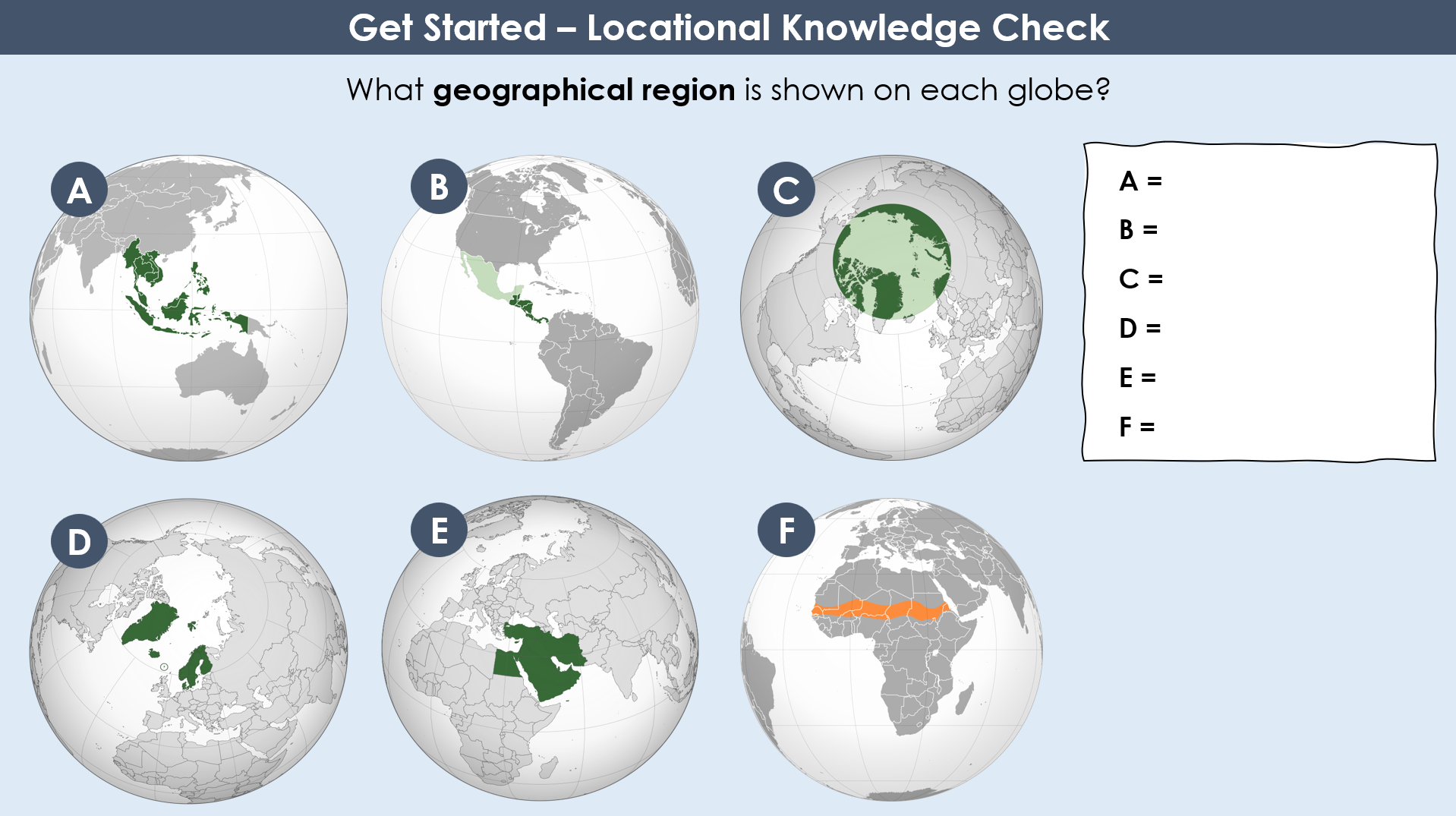
Exhibit A

Now don’t get me wrong – I love including quick little questions like this in my lessons. You almost always end up hearing about a fun connection or fascination that a student has with a particular place. But as a starter – it failed miserably. Why? It generated a lot of discussion and excitement, some people were done in 5 seconds and then sat there doing nothing, and the means of participation were unclear. Lots of people wanted to share their ideas and show off their knowledge (FIFA kids and their flags…). None of the above is conducive to a calm intentional first 5 minutes.
Exhibit B
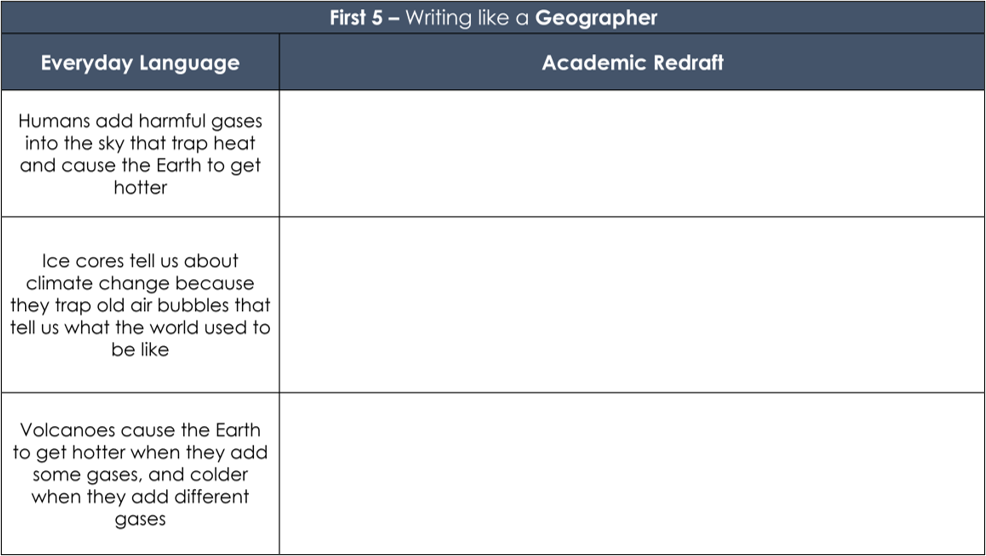
A nice idea for improving writing and encouraging the use of key terminology, but as a starter – it again, didn’t quite work. Why? I’d say activities like the ‘academic redraft’ benefit from a bit of warming up first. A recap of key terminology before it perhaps. Or introducing some paired discussion to talk and share ideas, or classroom questioning and discussion. “Writing floats on a sea of talk” - James Britton. All of these things set students up for success with an activity such as the academic redraft, but these things don’t have a place in the first 5 minutes of my lesson. A nice activity, but more effectively placed elsewhere.
Exhibit C
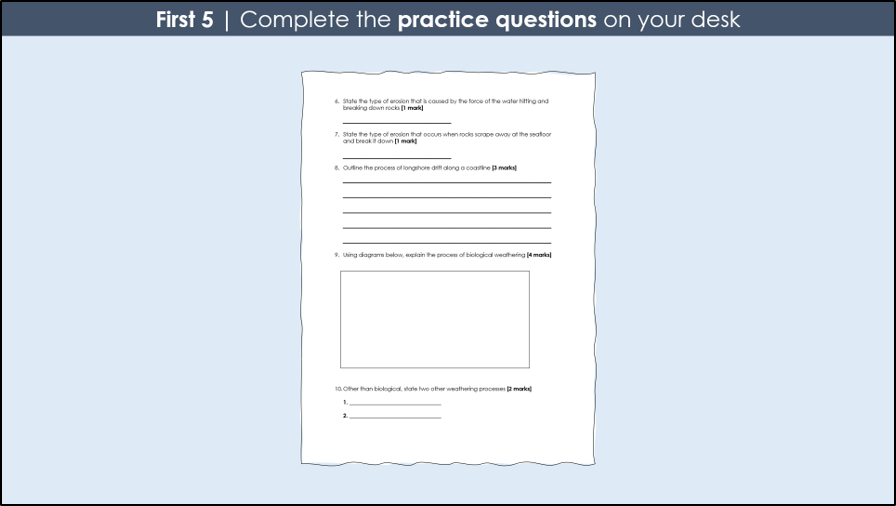
This one is okay as a form of retrieval and testing… Other than the fact that at 11 marks
(~1 minute a mark) it’s just a bit too long, and will guarantee that either not everyone finishes it or we eat into more and more lesson time than intended. Also requires extra printing, and the printer is definitely broken.
Exhibit D
You already know who in your classroom is going to spend the entire first 5 minutes looking for the sheet… Oh and 3 people weren’t here last lesson so they don’t have it… Oh and there’s a typo in it…
So what were the key errors above?
The means of participation were sometimes unclear (am I talking about this/ writing about this? In books/ on whiteboards?)
They were either too long or too short, so the rate of completion is inconsistent.
They were perhaps too complex for a 5 minute starter (or not complex enough…)
The most important error - I ended up having to intervene in some way, either to explain what to do, help people with it, manage the noise, find the sheet, or set out expectations of how to participate… none of which I want to be doing in the first 5 minutes of a lesson. In the first 5 minutes I’m already stretched in terms of what I must do. Register, equipment check, potentially manage/record lateness, check on specific pupils, meet and greet, walk round and circulate... I want to design my starters so that I have nothing else to do, so that I can focus on doing those other things with all of my attention.
So, what about the times where it went better?
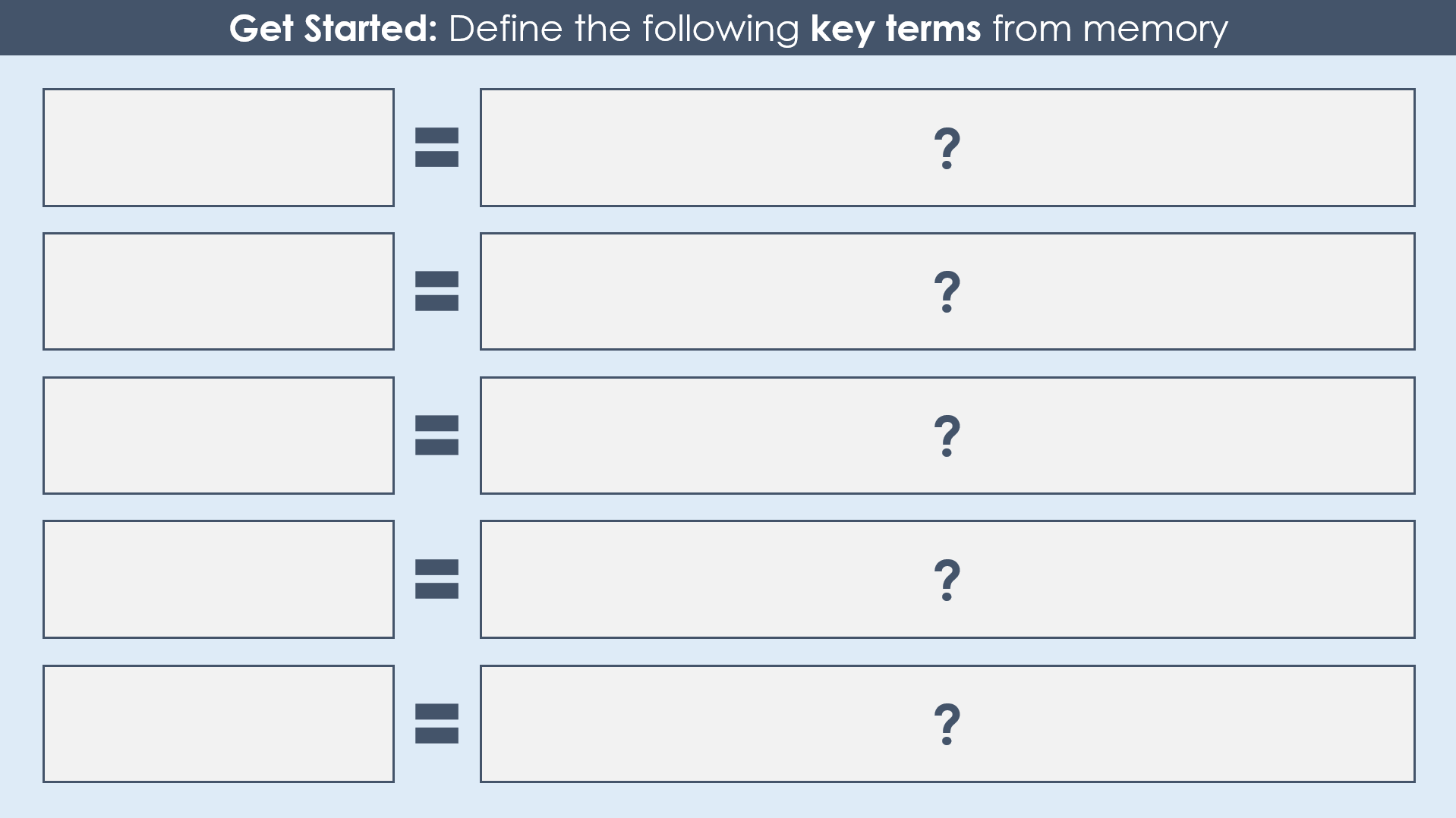
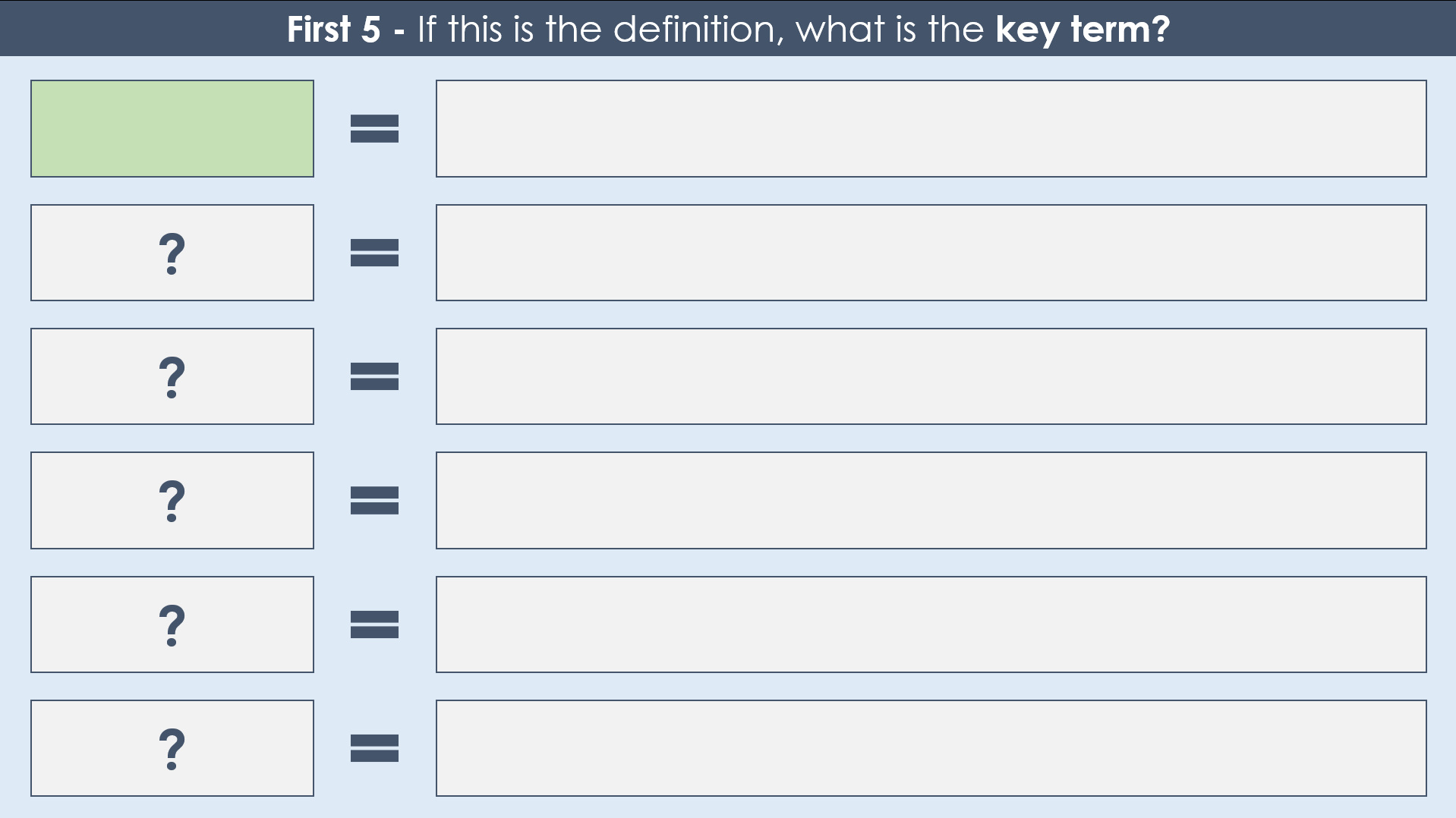
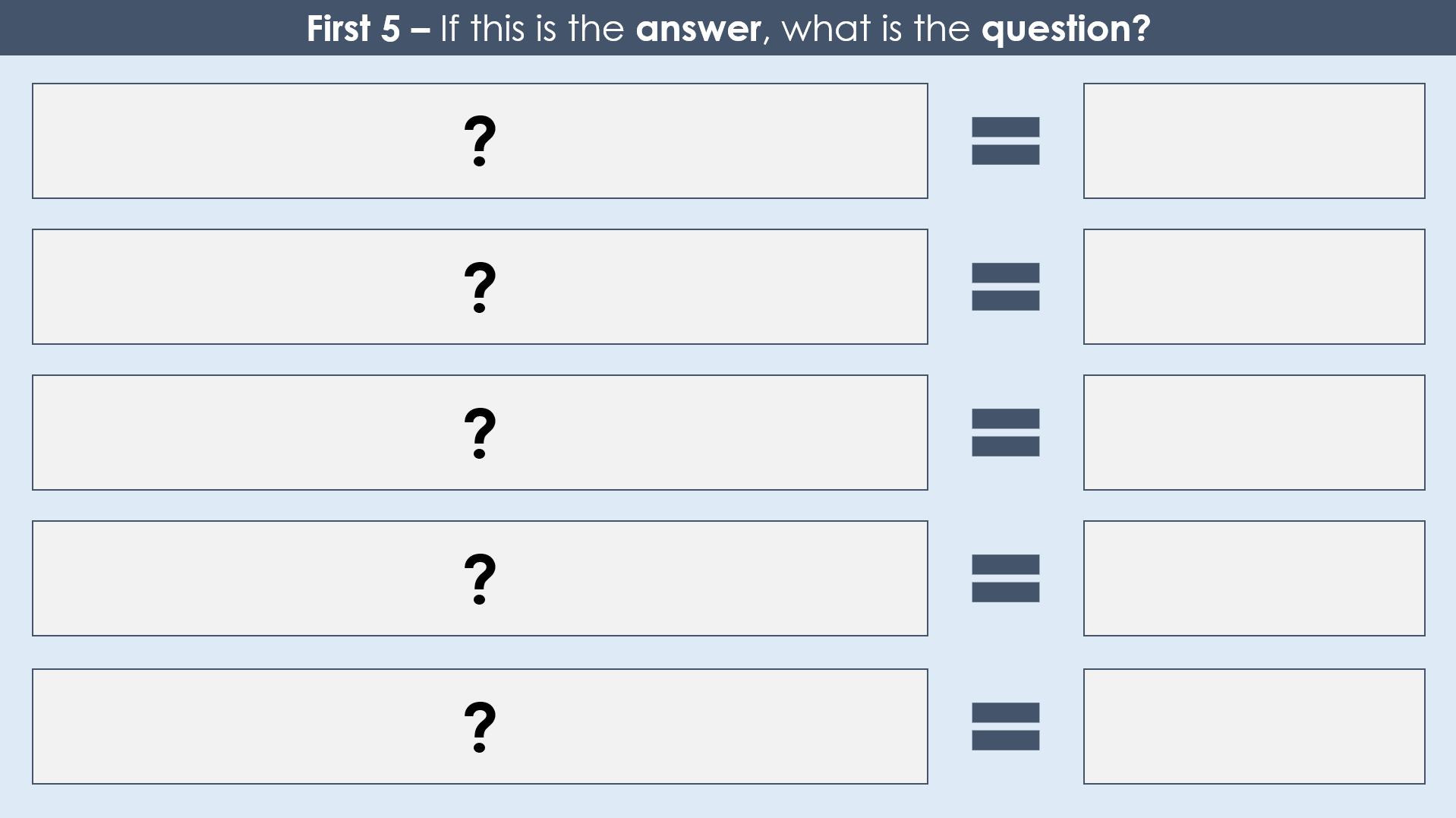
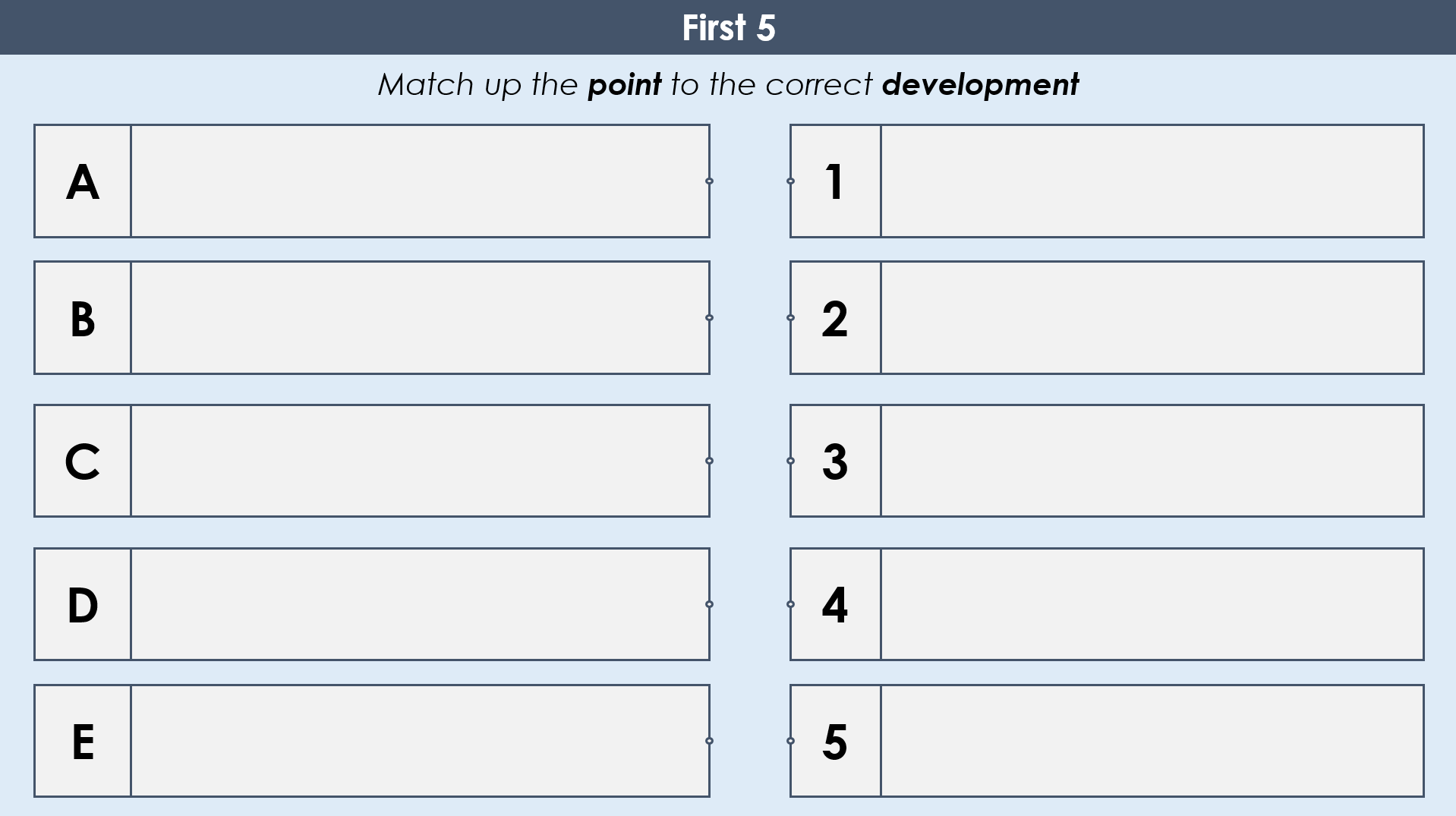
My current routine is to stand at the door, meet and greet, and hand out a mini-whiteboard to each student on entry. On the screen, will be an activity such as this:
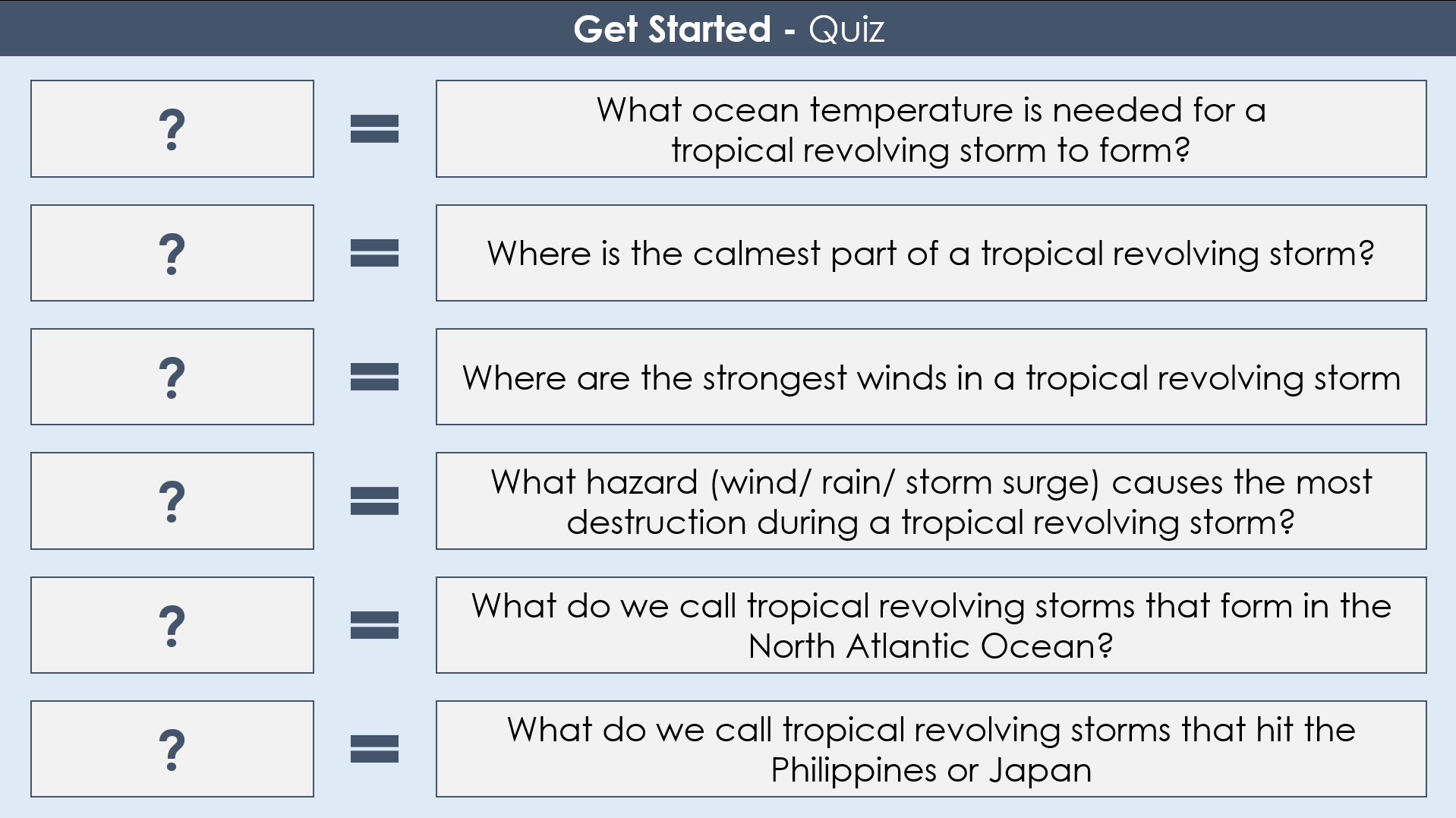
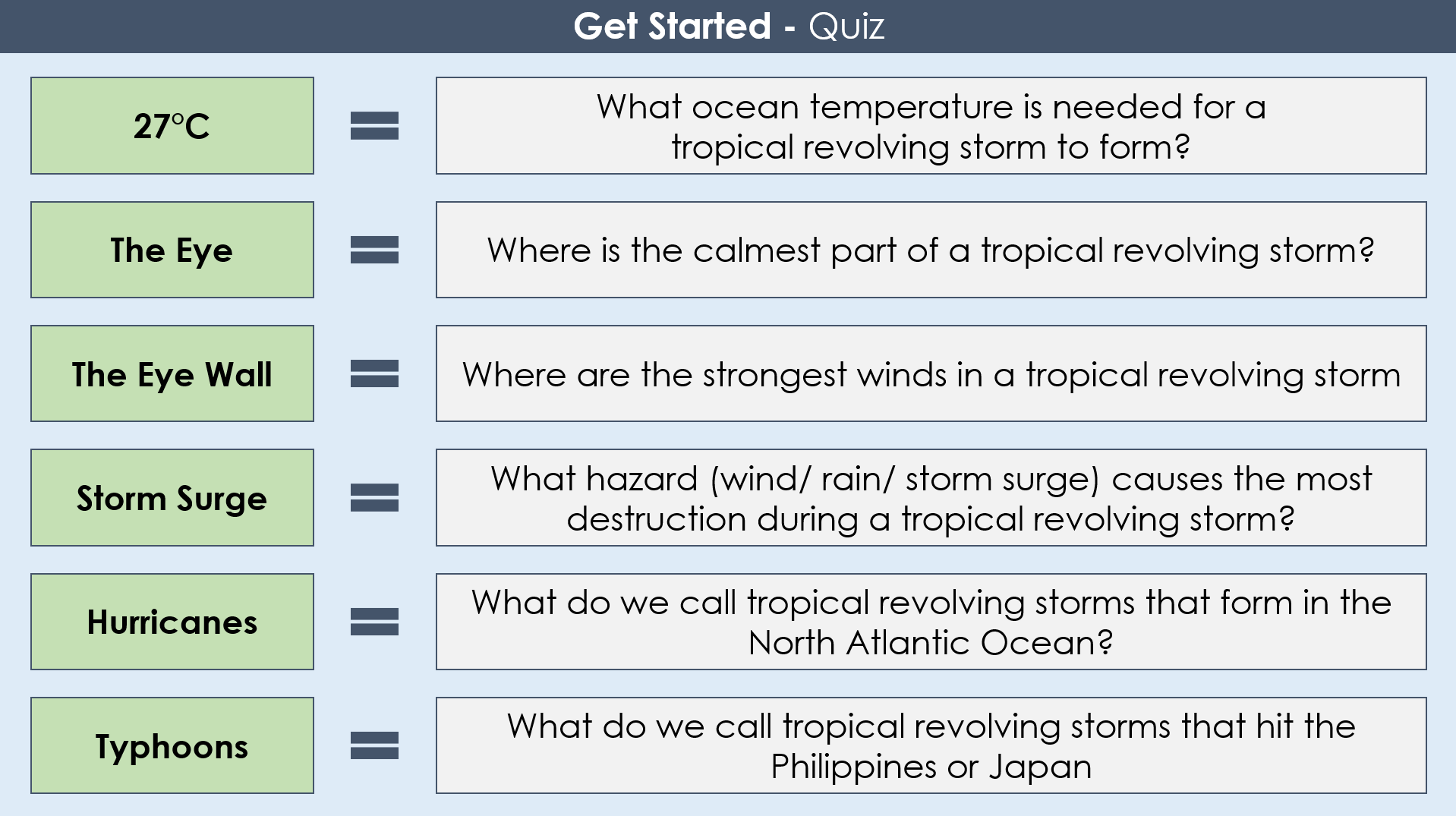
6 simple key retrieval questions. I like this one, and use it quite a lot. All students have to do is recall 6 key facts or key terms and write them on their whiteboard. Not taxing in workload, but does still require thinking and retrieval. It is also quick and snappy enough that the total starter (including getting sat down/ coats off/ register/ equipment check etc…) can all be done inside 5 minutes, so the teaching can begin quickly. A super common piece of feedback for trainee teachers (that I know I received a lot!) was that the lesson starters are eating too much into valuable lesson time and slowing the pace. Sometimes even 15 minutes into the lesson, classes will still be on the starter! So this is a great starter for pace.
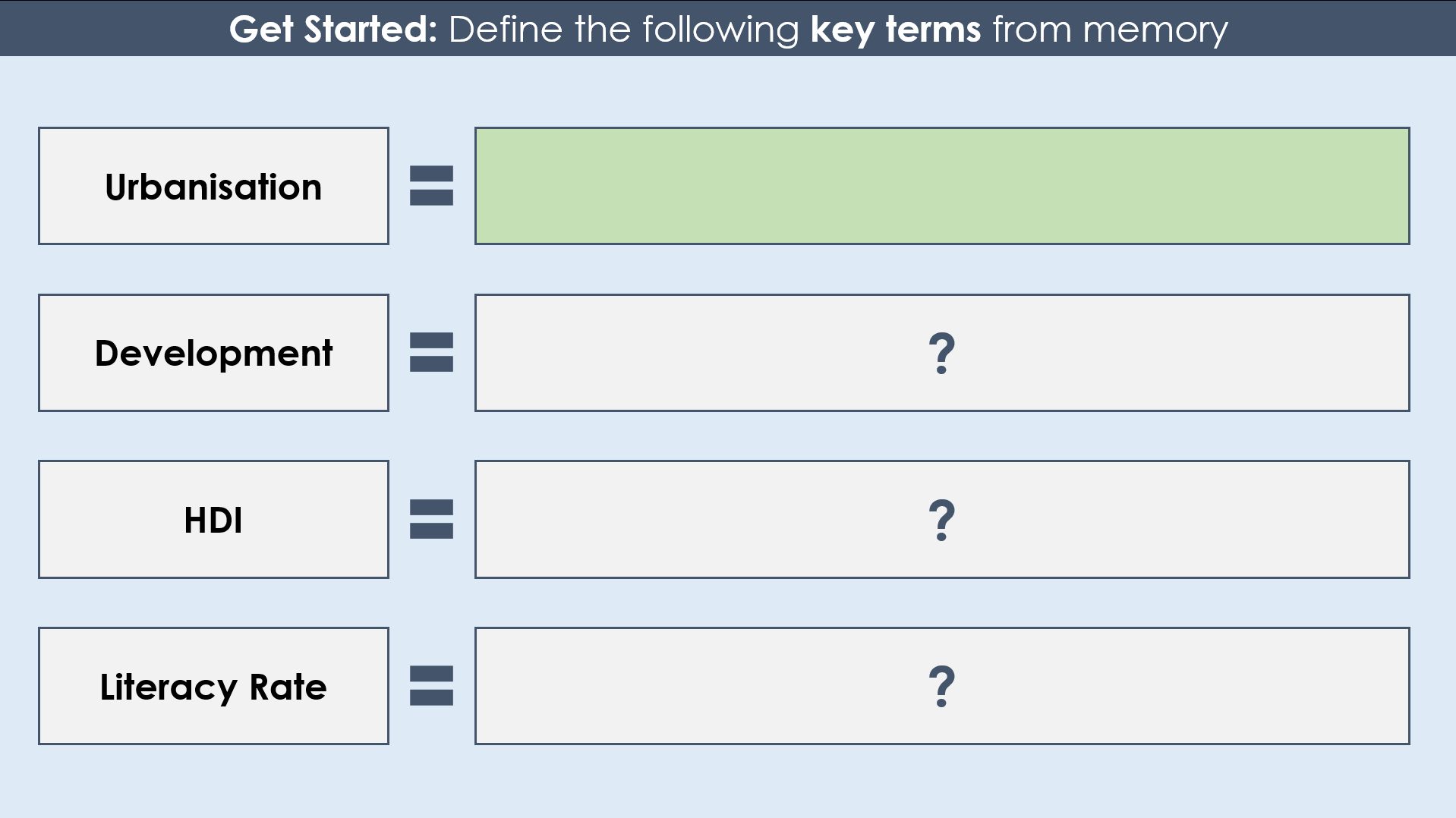
A similar idea to above, but with fewer key terms, as this time the students must write the accurate definition (takes longer). Really effective if you strategically choose key terms that are going to be prominent in the lesson, or ones that you are expecting to see in a piece of extended writing at some point later in the lesson or in an upcoming assessment. You can also bring back key terms from last unit or even longer to begin embedding some longer term retrieval.
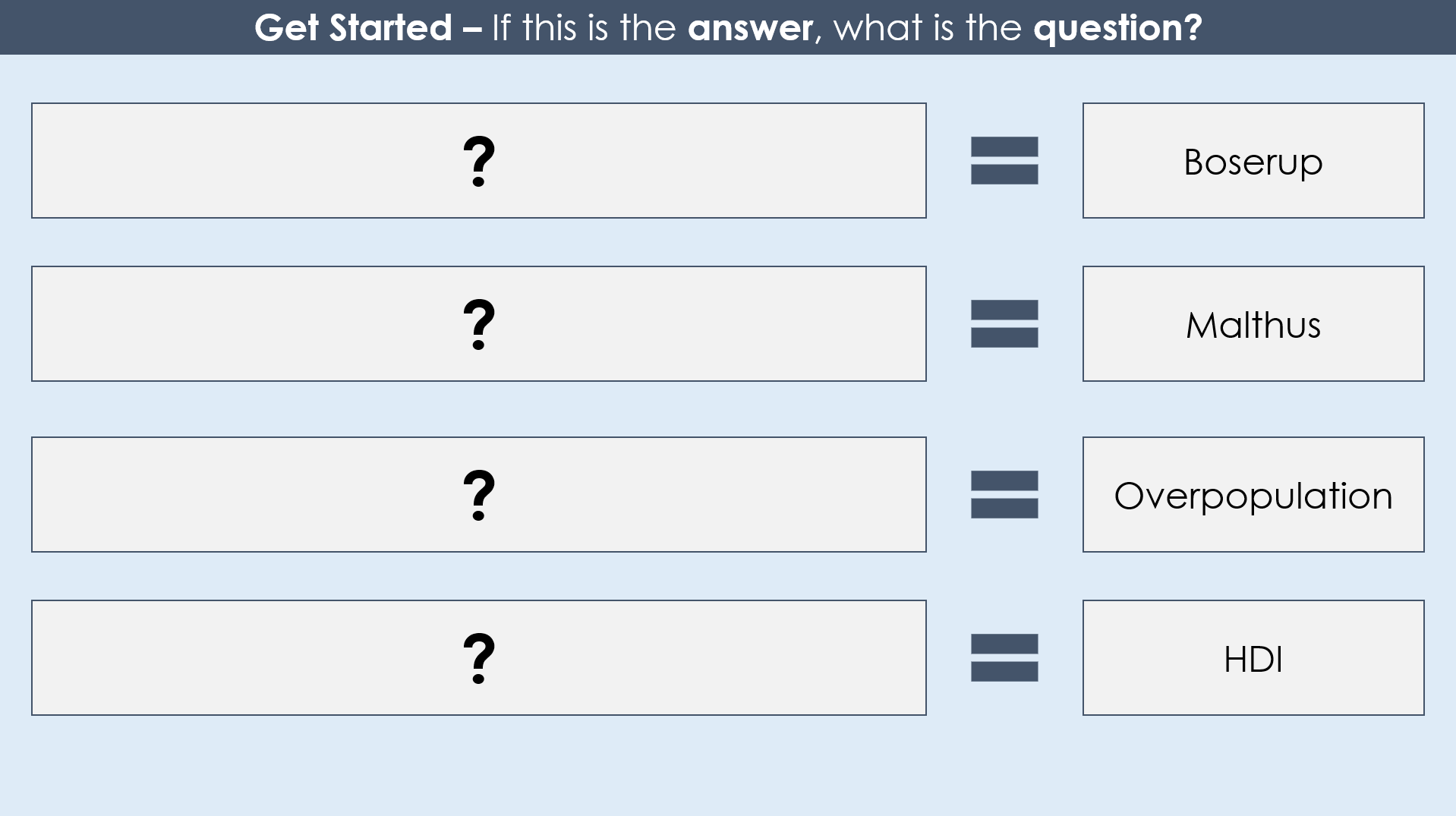
A bit more creative thinking required for this one! Don’t expect a huge degree of success the very first time you use it… but once students are used to it, it can be super effective and encourage great thinking. It can be helpful to use this activity in a lesson and explain/ model it before rolling it out as a starter activity.
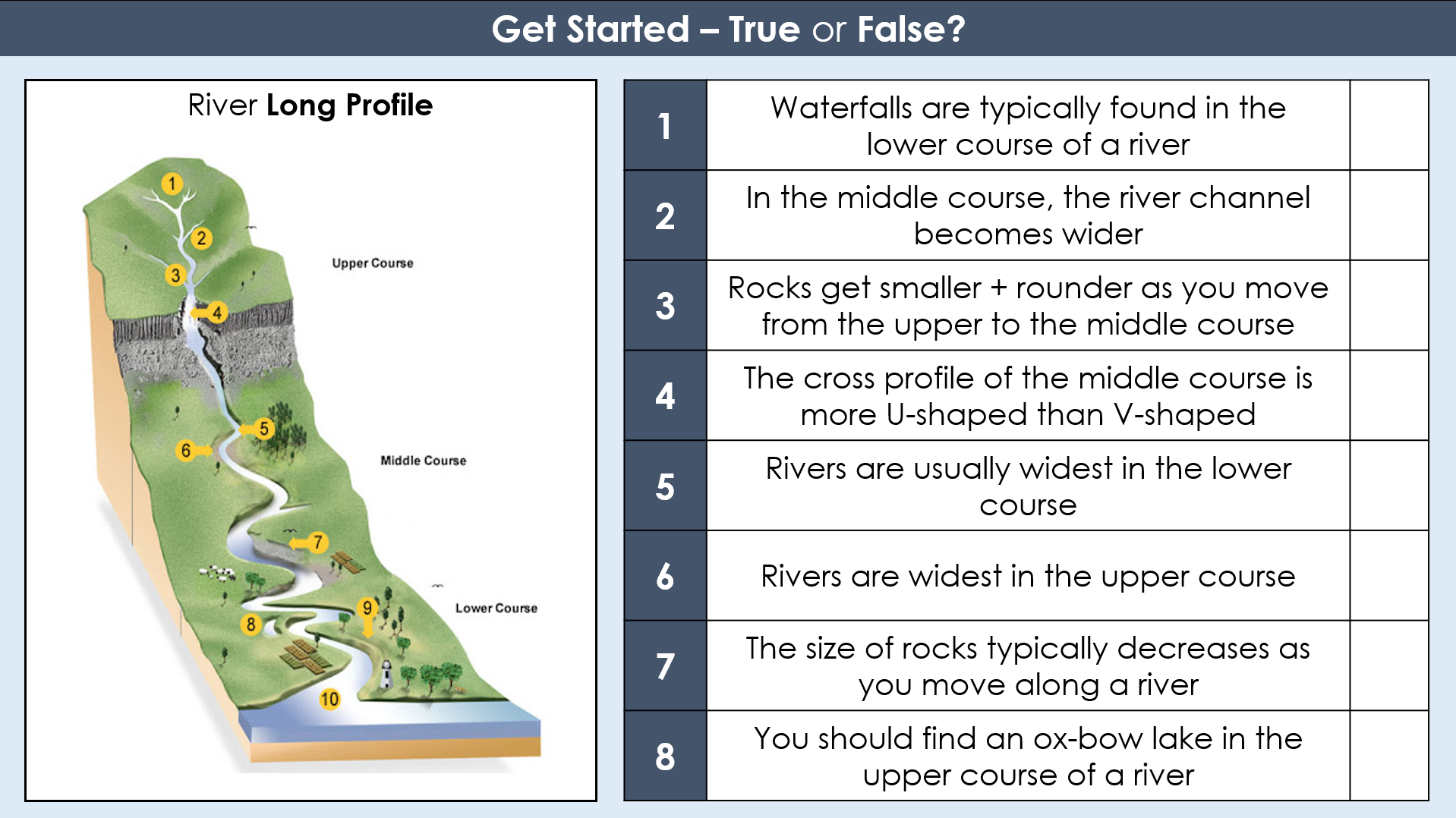
Good to use from time to time – checks for misconceptions well. But only if you further question and get students to justify their answers. Otherwise could just turn into a 50/50 guess situation.
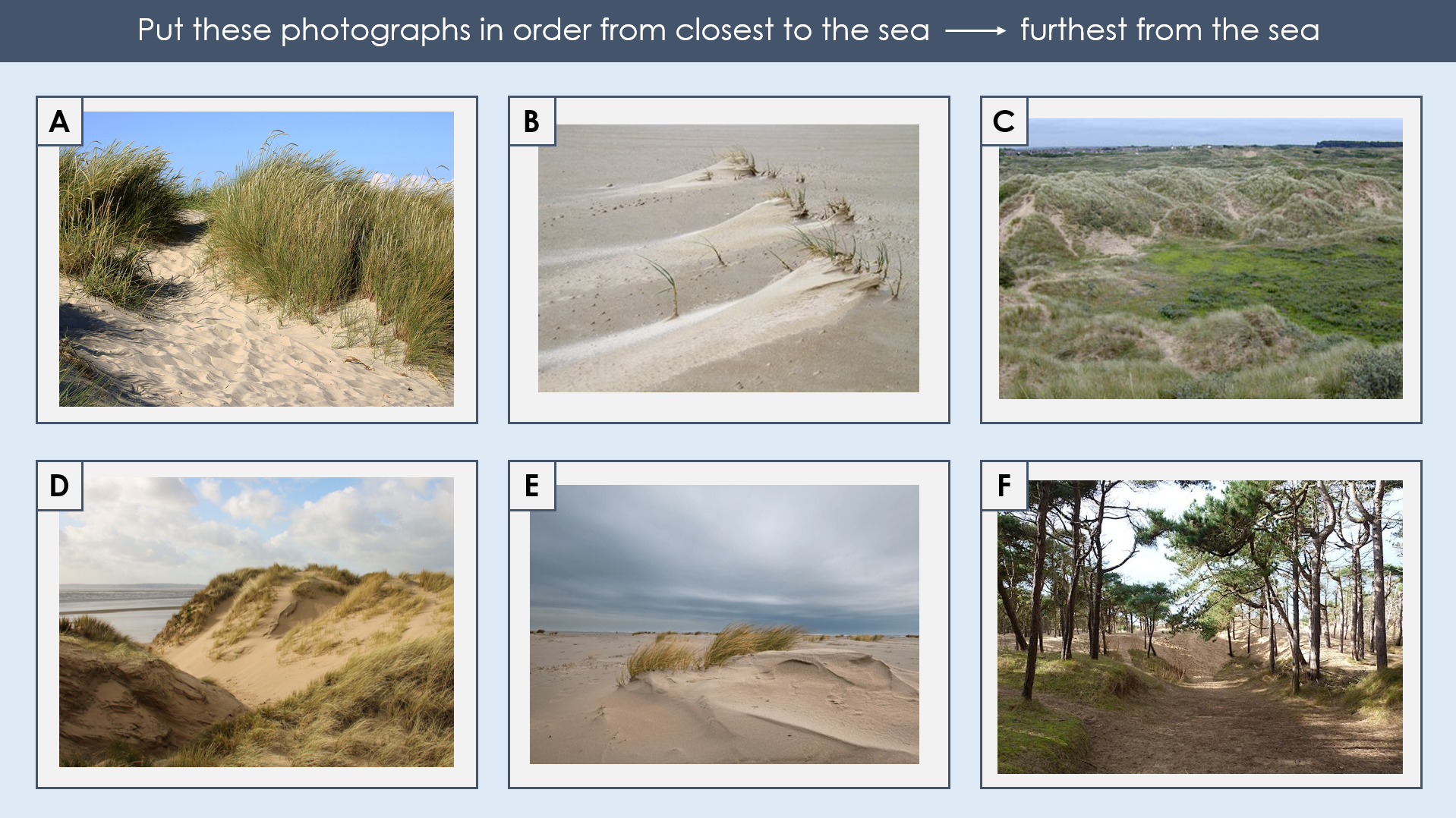
Again, I like how the structure of this means that all students must do is write 6 letters on their whiteboard. It is quick and snappy, so it is conducive to getting 100% completion and participation. This one was nearly too fast though… I had to be quick to get started so that students weren’t just sat around! A good option if you have a lesson that needs an even speedier start than usual.
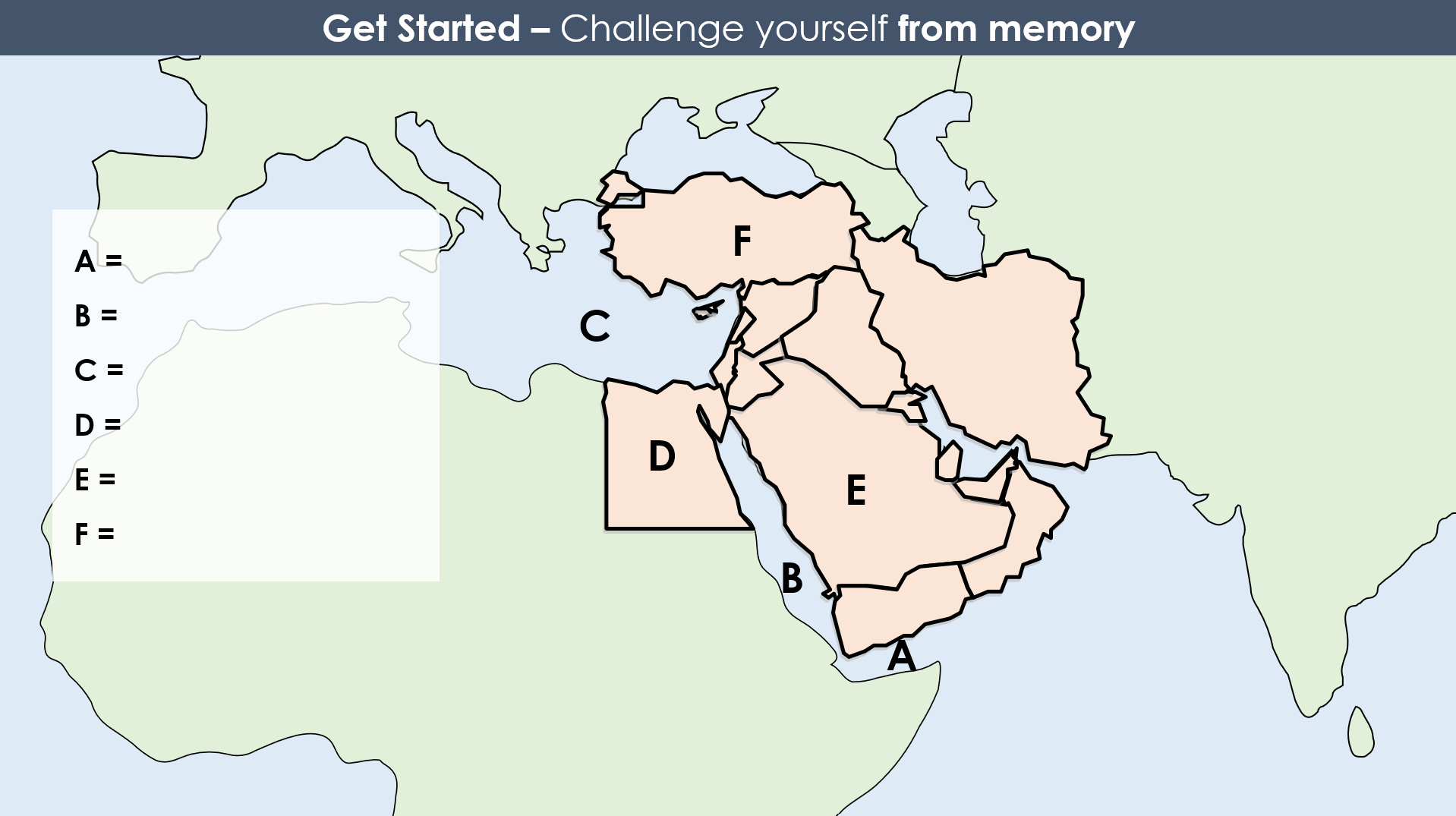
A great one to use repeatedly if you are trying to really embed locational knowledge. Even better if the lesson directly draws upon this knowledge. (This one taken from a lesson about the Suez Canal).
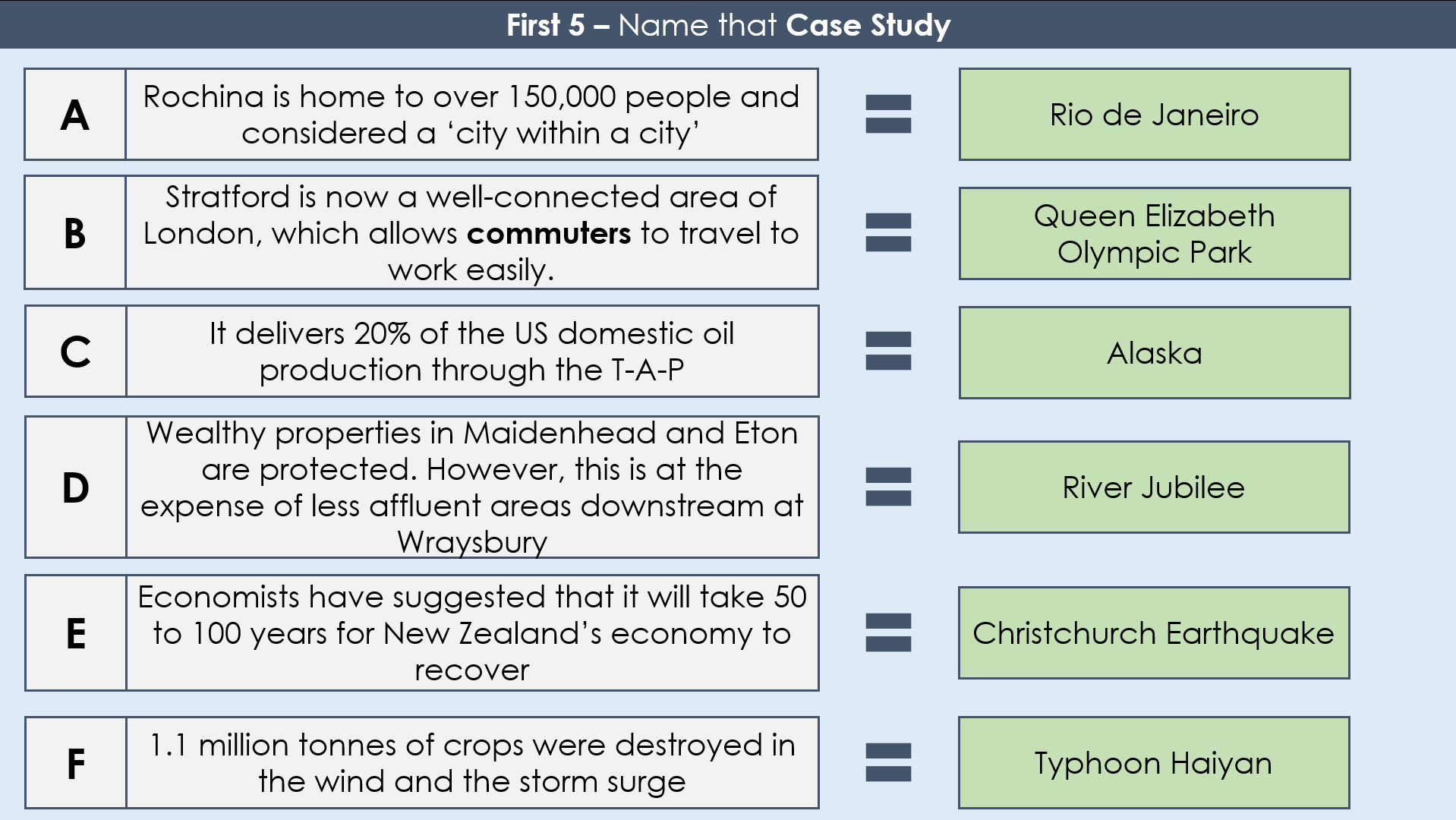
Some opportunity here for longer term retrieval perhaps. A great one if your class are struggling to remember which case study is which. I tend to use these in the run up to mocks a lot more.
So what do all these starters have in common?
I quite like how they are all recognisable and similar. It helps with consistency. There was one point last year when I missed a few lessons with a Year 11 class, and when I was back in school, I was walking up to my classroom door and my class were already stood looking in through the window. I overheard “you can tell he’s back in today (sigh)… that’s deffo one of his starters”. Flattering. I like to think this is because my starters are iconic and recognisable. Like Banksy or something.
I also think that including some slightly easier questions as easy wins in the first 5 minutes is super important. It can help boost confidence in pupils and create a small feeling of success early on in the lesson. Start the lesson positively!
Overall, these are my *current* principles for a strong start to my lessons
Strong starts should require little/no input from the teacher at all (leave it on the screen – they should be able to tell easily how to participate. Routine and familiarity help massively here - might take a few lessons at the start of the year to really embed.)
Strong starts should have a simple means of participation (little effort to get started, but still requires thinking & retrieval - also means students can’t be ‘busy-tricking’ by looking for sheets/ writing titles slowly/ not getting started etc…)
Strong starts should not overly taxing in terms of workload, but still require thinking & retrieval (similar to above)
Strong starts should be quick/ snappy – guarantees the possibility of 100% completion and participation within 5 minutes.
Strong starts should be consistent (makes life and routines a lot easier)
Strong starts should retrieve relevant knowledge that students will need for that lesson (as well as some longer term retrieval mixed in)
*I say current, as I expect my practice should evolve and change with experience and CPD. At the moment, I am 6 years into my teaching career, but there’s a chance my lesson starters will look differently 6 years into the future, and this post will need updating. Or maybe not!
‘Isn’t that too routine?’
‘What about getting students hooked on the learning?’
Some critiques to this approach could be that these tasks don’t have a ‘hook’ or an element of excitement that can spark curiosity in the lesson – which is definitely true. Examples of a more engaging ‘hook’ into a lesson might be the image of an unfamiliar landform to generate ideas about how it got there; the shocking fact that we are going to be exploring in lesson; the unusual or shocking story/news article that introduces the case study etc... There are loads of great ways that we can hook students in to our geography lessons and generate curiosity - but I would argue that a much better time for doing this is directly after finishing the starter. Surely, it is better to get students hooked on a topic or lesson when you can give all your attention to it? When can you generate discussion and interest? When you can question, and share ideas? When you have proper capacity to be front and centre of the room, and listen to their ideas? All of which I would struggle with in the first 5 minutes of a lesson - especially if I have had to move rooms!
I am not suggesting that I know the best way for everyone to start their lessons. This is just my current opinion and based on my experience. I also don’t think there is necessarily a perfect answer for the best way for different teachers or subjects to start lessons. Even if there was – I don’t think it would be for the best if every teacher used it all of the time. Imagine every lesson starting in exactly the same way. 5 lessons a day, 25 a week, 39 weeks… you’re talking nearly 1000 lessons. Even if there was a golden answer to ‘the optimum lesson starter’, I would almost argue that we don’t use it all the time, to allow for some variety, even if it comes at the cost of a slight drop in efficiency… But that is perhaps for another discussion.
I have collated a range of starter templates that I use regularly. Makes planning lessons a bit quicker. If PowerPoint is your thing and you want to try some them, feel free to download. Let me know how you find them!